Unreal Ultimate 2D Topdown Udemy Course – Section 4 – Monster World Project

March 13, 2026

The Ultimate 2D Top Down Unreal Engine Course

Title:
The Ultimate 2D Top Down Unreal Engine Course
By:
Cobra Code

https://www.udemy.com/course/unreal-2d-top-down/
Udemy Course Link

Description:
Section 4 focuses on creating a small project similar to an old school Pokemon game using Paper 2D.

Overview:
This section really gets you started on using Paper2D within Unreal. Everything from handling Sprite assets to tile maps to basic animations and layer sorting are covered.

My Notes Breakdown by Sub-Sections:

16. Monster World Overview

Overview of what is covered in this section.
Shows it’s similar to an older Pokemon style game.
Sprite importing and asset management, tiles, layering.
Text box setup.

================================

17. Setting Up the Project and Importing Assets

Starting with Blank project:

  • Blueprint
  • Target Platform: Desktop

Created “New Level”

  • Empty level option

Saved this new level as its own Level asset in a folder named “Maps”

  • like Unity’s Scene assets somewhat

Project assets’ license is: CC0

  • free to use in your own games

Asset Type Conversion Rundown

  1. Characters > Flipbook
  2. Environment Tiles > Tilemap
  3. Environment Flowers > Flipbook
  4. Environment Other > Static Sprites

Creating Static Sprites

Example:
On Chest sprite:
– RMB
– Sprite Actions > Create Sprite

  • this creates a Sprite asset from the Texture asset

Importing Sprite Assets

By default, sprite assets usually look off on initial import.
After importing:

  1. Right click and select: Sprite Action > Apply Paper2D Texture Settings

This changes some of the direct art asset settings:

  1. Mip Gen Setting: NoMipmaps
  2. Texture Group: 2D Pixels (unfiltered)
  3. Editor Show Final Encode: TRUE
  4. Compression Settings: UserInterface2D (RGBA)
  5. Filter: Default (from Texture Group)
    • NOT Bilinear or Trilinear

UI:

  • also applied the Paper2D Texture Settings since it is pixel art.

================================

18. Making a Tile Set and Tile Map

Tile Set is like a palette of brushes you can use to create a Tile Map.

After placing the Tile Map into the Viewport, they rotated it 270 along the x-axis to lay it “flat” in the world.

  • They mentioned this is helpful with having the NavMesh setup work properly.

To prevent tearing between tiles, they generated a padded version of the Tile Set asset.

  • this creates another Texture asset with some padding effect to prevent them from bleeding into each other.
  • it looks like this just very literally duplicates the edge pixel all around the border of each tile a couple times and expands the tiles outward to fit them.
    • so assume this is to prevent those weird super tiny “gaps” you can get between exact sized tiles sometimes?

Creating Tile Set

Select Texture Asset
RMB
Sprite Actions > Create Tile Set


Tile Set Settings

Modify Tile Size to fit your individual tile sprite dimensions:
i.e. 16 px x 16 px

Setting Collision

  • Select Tile
  • Click “Add Box”

Removing Collider:

  • Under Single Tile Editor, click Reset next to Index [0] – 2 members.
    • * This is not very intuitive, seems very complex for section handling collider.

Tile Map

Create Tile Map:

  1. Select Tile Set asset
  2. RMB
  3. Create Tile Map

Active Tile Set:

  • Tile Set assets to select tiles from.
  • Can add multiple Tile Set assets at once.

Can “stamp” an area of selected tiles by holding Shift to create a selection for the stamp.

Tile Layer List:

  • allows for layering of tile layers

Setup:

  • where you set the full width and height of the map (in tiles)

================================

19. Preparing the Character Sprites


General

Modifying parameters of several assets at once.

  1. Shift select all the assets.
  2. RMB
  3. Asset Actions > Edit Selection in Property Matrix

Converting a Sprite Sheet to Flipbook

Select sprite Texture Asset and:

  • Sprite Actions > Extract Sprites

Extract Sprites generally defaults to Sprite Extract Mode : Auto.

  • but you generally change it to Sprite Extract Mode : Grid.
    • because you want the sprites to fit a general grid size, and not the smallest space possible.

Creating Flipbook Asset:

  1. Select multiple Sprite Asset
  2. RMB
  3. Create Flipbook

Working with Flipbook

Flipbook asset has a Frames Per Second parameter that can be modified to change the speed the Flipbook is played.

  • controls the general speed the animation is played

Making Character Flipbooks

They made separate Flipbook assets for each direction of the walking animation.
They also made separate Flipbook assets for the Idle of each direction.

  • each of these was just a single Spirte asset converted into a Flipbook

Folder Organization

Example for Character sprite assets:
PaperAssets > Characters > Red

  • this is the parent path to all sprite assets for this single character, Red.
  • this is also used to contain assets used directly by the game as they described.
    • so it contains all the Paper Flipbook assets (the animation assets)

PaperAssets > Characters > Red > Frames

  • placed all the individual extracted Sprite assets here.
  • (after extracting them from the Sprite sheet)

PaperAssets > Characters > Red > Textures

  • Sprite sheet placed in here (Since it is a Texture asset)

Naming Conventions

Flipbook Assets examples:
FB_Red_Walk_D

  • FB for Flipbook
  • Red is the character
  • Walk describes the animation
  • D is for down, which is the specific walking animation of that Flipbook.

FB_Red_Idle_R

  • FB for Flipbook
  • Red is the character.
  • Idle describes the animation.
  • R is for right.

================================

20. Best Project Settings for 2D Games

Common Problems:

  • motion blur and anti-aliasing can cause visual problems.

Link for “Best 2D Settings for Unreal Engine 5”:
https://cobracode.notion.site/Best-2D-Settings-for-Unreal-Engine-5-0895133a56924f1ca7f2149cf111983b

  • They just go through this list and set these settings any time they do a new 2D project.

Selecting All Assets in Project of a certain Type:

  • can use the Filter in the Content Drawer.
  • After selecting the Filter, can just enter the asset type you are interested in, and it’ll display all assets of that type in the project.

** They created Project Templates that just have all these settings set for 2D games immediately.


Project Settings

Turn OFF Auto Exposure.

  • having this can cause dark scenes to get brighter over time.
    • I saw this happening when I was tinkering with settings before and thought something was broken!

Motion Blur = OFF


Post Processing Settings

Access through Quick Add Menu.

PostProcessVolume default only applies if camera is within the volume.
Can make the PostProcessVolume affect everything by setting Infinite Extent (Unbound) to TRUE.


Texture Settings

  • For some reason for 2D Sprite Texture assets, if you set the Filter to Default (from Texture Group), it can look correct in editor but reverts to an option like Bilinear in builds which makes them blurry again.
  • to solve this, they select the Filter: Nearest.

================================

21. Character Blueprint and Pixels Per Unit

Blueprint for character:

  • created as Paper Character Blueprint

With a discrepancy between the Sprite asset and the Paper Character Blueprint size, they recommend making the Sprite larger.

  • the Paper Character makes assumptions about the general size of the character, which is what it is approximately sized at by default, so better to get closer to that instead of the other way around.

*** 1 Unreal Engine Unit = 1 cm
– this is DIFFERENT from Unity, which generally considers 1 unit as 1 m.
– this technically isn’t “real” but is a universally accepted approximation.

** There is a project wide setting to have a default Pixels per Unit set for all imported assets.


Pixels Per Unit

Sets scaling of pixels to 1 Unreal Engine Unit.

  • This is their recommended way of scaling pixel art assets.
    • this is similar to Unity.
    • this is done on the Sprite assets

They changed all their Sprite assets across the board to the same Pixels per Unit value.

  • I think this might be the ideal practice, but not positive.

Also need to change Tile Map assets Pixels per Unit values.

================================

22. Setting up the Camera and Possessing the Character

Added Player Start actor to Viewport.

  • appears to be a sort of spawn point that connects to a Game Mode (like a Game Manager)

Created new Game Mode Blueprint

  • think this is like a manager class in Unity?

*** FIXED EDITOR CAMERA ROTATION PROBLEM:
– Somehow my camera in Editor started rotating abnormally (directions were very backwards).
– You can fully reset the Editor camera by entering this command in the Console Commands:
BUGITGO 0 0 0 0 0 0

Settings Cameras to Orthographic helps ignore “height” differences along the z-axis.

  • including preventing character from “falling” into place at game start if it spawns above the ground.
  • They disabled Do Collision Test on SpringArm.
    • not needed for 2D games.

Character Blueprint

Added a Spring Arm.

  • with a Camera.

Setting the Default Game Mode

Go to:

  • Edit > Project Settings… > Project > Maps & Modes
    • set Default GameMode to the newly created one: GM_TopDown
  • Here you can also set the Map that opens on Editor Startup and the Game Default.
    • This feels like setting Scenes in the Build Settings for Unity.

================================

23. Enhanced Input and Character Movement

Uses new Enhanced Input Actions setup from Unreal Engine 5.1 on.

Input Actions setup requires two main parts:

  1. Input Actions
    • seems to be individual inputs.
  2. Input Mapping Context
    • the full mapping of all the inputs to their output game behaviors.
  • They noted in the character controller Blueprint Event Graph setup that using Get Controller and casting to Player Controller is nicer for multiplayer setup.
  • Directly getting the Player Controller requires setting a player index for multiplayer.

Input Actions

Created a single Input Action, Move.
Set its Value Type to: Axis2D (Vector 2D)


Input Mapping Context

This is where you associate an input (i.e. a keyboard key press of “A”) with a specific Input Action.
Can also apply Modifiers to these values based on different inputs.

  • i.e. Lets you use a single Input Action but different inputs (i.e. W and S) to go different directions based on the Modifiers.

For the IMC_TopDown (primary player controller for this project):

  • set W, A, S, and D as 4 separate input mappings all under the single IA_Move Input Action.
  • used modifiers to apply this in the different directions
    • combinations of Negate and Swizzle
    • Negate reverses direction.
    • Swizzle changes axis.

Folder Organization

Content > Input

  • main folder for all input assets
  • Input Mapping Context assets at this level

Content > Input > Actions

  • put Input Action assets here.

Player Blueprint Event Graph Setup

Need to initialize Input Mapping Context.

  • Get Controller > Cast to PlayerController > Enhanced Input Local Player Subsystem > Add Mapping Context

Created an Enhanced Action Event from our Input Action asset, IA_Move.

  • Triggered: occurs constantly multiple times as this input as held down.
    • like Unity Input.GetKey
  • Started: occurs once right when input is entered.
    • like Unity Input.GetKeyDown
  • Action Value: the return value of this input.

In this case, the Action Value would return a Vector2D based on our Input Mapping Context, including the Negates and Swizzles.

  • used this with a Break Vector2D node to separate out the X and Y values.

Add Movement Input node:

  • inherited from Pawn class
  • could take broken down x and y values as input in Scale Value along with appropriate directional World Direction values to move player in correct directions based on input.

================================

24. Directional Character Animations from Scratch

Promoted Action Value of Enhanced Action Event to Variable.

  • makes it a variable in the Blueprint you have access to.

Renamed the Action Value variable to Directionality.

  • used the values of this Vector2D to determine the direction of the player to update the sprite accordingly (with many bool checks).
  • changed Sprite by using Set Flipbook node, with the Blueprint Sprite dragged in as reference.
    • Set Flipbook seems to work somewhat like Unity when playing an animation, if using sprite assets.

Creating a Function:

  • collapsed a bunch of added nodes into a single function.
    1. Select all nodes.
    2. RMB
    3. Collapse to Function
  • then just renamed the Function to UpdateAnimation.

Enhanced Input Event > Completed

  • happens a single time when input is released.
  • like Unity Input.GetKeyUp

Branch node:

  • if else statement node

================================

25. Adjusting the map and collisions

Removed all the individual tile colliders from our Tile Set asset.
Replaced those with a single Plane in our Map with a single collider.

  • still using a collider to keep player from falling through floor.

Game is still using 3D collision for collision detection.
Changed CharacterMovement component’s Max Step Height from 45 to 10.

  • ** They recommend not using 0 because even as a 2D game where that could make sense, it can cause weird issues even walking over flat terrain and doesn’t even work for collision well anyway.

Modified the Sprite assets to make their colliders thicker.

  • thickened from 10 to 100 on the sign and tree Sprites.

================================

26. Foreground and Background sorting

  • They don’t include the individual Sprite assets in the environment Tile Map because it restricts your options for layer sorting this way with Unreal Paper.

Keys:

  1. Made all Sprites use Material: TranslucentUnlitSpriteMaterial
  2. Edited colliders of all Sprite assets we wanted to be able to walk behind to about 1/3 their full height.
  3. Moved Sprite privots to Bottom Center.
  4. In Unreal Project Settings > Engine – Rendering
    • set Translucent Sort Policy to: Sort Along Axis
    • the default axis to sort along was correct (0, -1, 0)

Shrunk player collider radius so top doesn’t have as much collision area.
Make sure Material changes apply to Sprites in Blueprints.

  • Blueprint Material settings will override base Sprite settings, so have to go into them individually to check and update if needed.

================================

27. Project files with layer sorting

  • Just a checkpoint to download a new project file if you messed up earlier steps.

================================

28. Creating a simple message UI with custom fonts

2 main parts:

  1. Widget for entire screen
  2. Modular part for message box

Widgets = UI elements in Unreal Engine

** Want to minimize use of Canvases in Unreal for optimization purposes.

Created two new Widget Blueprints:

  1. WBP_MessageBox
    • simple text containing message box.
    • Modified: padding, Screen Size – Desired, font, Auto Wrap Text to TRUE.
  2. WBP_MainHUD
    • has our singular Canvas.
    • contains the Message Box.
      • anchored and positioned to bottom center of screen

In BP_Red (Player Blueprint) we generate the WBP_MainHUD on start, and set it as a variable reference useable later.

================================

29. Making a pickup

  • They recommend creating a separate collider for interactions.
    • like separating the trigger / interactive collider from the physicsl obstacle layer collider.

Created a Blueprint for the item itself, BP_Pickup.

  • in this Blueprint, created a GetPicked function.

In the player Blueprint (BP_Red):

  • added new Input Action event for Interact
  • on Started of this action, do check
    • so it only happens a single time on input
  • when interacting, do a Overlapping Actors collision check to find in range colliders.
  • check by cast if any are BP_Pickup
  • if so, invoke GetPicked function

Blueprints

Events cannot have a return type.

================================

30. Showing the item message

Shortcuts:
Ctrl + P = brings up search window for assets

Created function within the WBP_MainHUD to change visibility.
BP_Red (player controller) invokes control of message display using collision detection with interact Input Action.
Setup simple Retriggerable Delay to have message go away after some time.
Made BP_Pickup ItemName string and ItemID int Instance Editable so we could have different BP_Pickup actors in Viewport with different ItemName and ItemID.

================================

31. NPC Dialogue and Interfaces


Technical

Casts are a hard reference.

  • So if you load a Blueprint with a cast, it must also load any casted Blueprint types.
  • increases load times.

** Can use Reference Viewer to see dependency chains.

They setup a Blueprint Interface.

  • reduces hard references.
  • more scalable Blueprint setup in BP_Red (player controller).

Unreal Ultimate 2D Topdown Udemy Course – Section 2 – Unreal Engine 5 Crash Course

March 6, 2026

The Ultimate 2D Top Down Unreal Engine Course

Title:
The Ultimate 2D Top Down Unreal Engine Course
By:
Cobra Code

https://www.udemy.com/course/unreal-2d-top-down/
Udemy Course Link

Description:
Section 2 is focused on covering the basic fundamentals of using the Unreal Engine (specifically Unreal Engine 5).

Overview:
I make a lot of personal comparisons to Unity since I’m much more familiar with it. That helps me envision how the different parts of the project connect since I already have a mental image of how it flows in Unity.

My Notes Breakdown by Sub-Sections:

7. How to Install Unreal Engine 5

Download Epic Games Launcher.
Get Unreal Engine 5.4

================================

8. How to create a new Project

Created a new Third Person Template project named “CrashCourse”

================================

9. How to navigate the Editor

Main Window = Viewport
Has similar translate, rotate, and scale gizmos to Unity when selecting(left-click) objects.

Undo:
Ctrl + Z

Redo:
Ctrl + Y

Selection Shortcuts:
W = translate
E = rotate
R = scale

Can change translate, rotate, and scale snap increments in top right of Viewport.


Camera Movements

Hold Right-Click and drag = rotate view
Hold Middle MB = pan view
Hold Right-Click + WASD = translate camera like 3rd person floating camera
Hold Right-Click + scroll scroll wheel = increase/decrease movement sensitivity (move camera faster or slower)
Scroll scroll wheel = zoom in/out


View Modes

Basic is Lit.
Has options like: Unlit, Wireframe.

Show button:

  1. Navigation used sometimes to check Unreal NavMesh.
  2. Collision used to check actual collision of meshes in testing/debugging.

World Outliner

  • Unreal equivalent of Unity’s Inspector.

Can press “F” with something highlighted in the Outliner to focus on it.

  • * Also like Unity

Play Mode

Start by:

  1. Pressing Play button at top of Viewport.
  2. Alt + P

ESC = exit play mode
Shift + F1 = get mouse controls back to interact with editor
Shift + F1 + click Eject = get mouse controls back, and be able to click in Viewport to edit

Can make changes during play mode, but they will not be saved upon leaving play mode.

  • * Also like Unity

Viewport seems to act as both the Scene and Game view from Unity.

================================

10. Content Drawer and Blueprints

Content Drawer appears to be like the Assets section from Unity.


Content Drawer

Ctrl + Space = shortcut to pop open this drawer


Blueprints

Common naming convention:
prefix with “BP_”

Event Graph
The Event Graph portion of a Blueprint is the visual scripting aspect that houses a lot of the logic building.

Viewport
Shows the full structure of the Blueprint in more of a game space view.

They are much more than just the “code” or logic of something.
They are the full makeup of an entire object.

  • * Closer to a fully built out Unity prefab.

================================

11. How to make a simple Blueprint

When creating a new Blueprint, there are many options to base them off of.

  1. There are a few main options, with Actor being the simplest.
    • Actor seems comparable to GameObject from Unity.
  2. Then there are hundreds of other more specific case options.

Naming Conventions for Unreal Assets

Recommended Unreal Asset Naming Convention Link:
https://dev.epicgames.com/documentation/en-us/unreal-engine/recommended-asset-naming-conventions-in-unreal-engine-projects

[AssetTypePrefix][AssetName][Descriptor]_[OptionalVariantLetterOrNumber]

  • AssetTypePrefix identifies the type of Asset, refer to the table below for details.
  • AssetName is the Asset’s name.
  • Descriptor provides additional context for the Asset, to help identify how it is used. For example, whether a texture is a normal map or an opacity map.
  • OptionalVariantLetterOrNumber is optionally used to differentiate between multiple versions or variations of an asset.

================================

12. Adding functionality to our Blueprint

Event BeginPlay:

  • similar to Unity Start

Event Tick:

  • like Unity Update

Event ActionBeginOverlap:

  • they just don’t like it there at the highest level of the Blueprint because it’s ambiguous
  • they prefer adding it more directly on component it relates to

They basically setup a speed increasing pickup in this section.

  • very similar practices to Unity, just done with Blueprints and slightly different jargon.
  • Remember to connect Exec pins properly.
  • Ensures they even run.
  • Determines the logic order.
    • basically how lines of code would be structured

Events:

  • found when selecting a component in a Blueprint, shows up in the Details panel.
  • this example focused on OnComponentBeginOverlap
  • USE Print String like Debug.Log!

Pickup Edits

OnComponentBeginOverlap

  • like Unity OnColliderEnter

Destroy Actor

  • like Unity GameObject.Destroy

Used “Cast To BP_ThirdPersonCharacter” with OnComponentBeginOverlap to ensure collision logic only occurred when colliding with the player.

  • like checking GetComponent against something only player has to check what collided.

Collision Parameters

Changed Collision Presets of the pickup spheres from BlockAllDynamic to OverlapAllDynamic.

  • goes from being a solid obstacle to something that can just be passed through.
  • like Unity trigger vs. non-trigger colliders.

Event Graph

In My Blueprint panel, you can add variables.

  • these can then be drag ‘n dropped into Event Graph to utilize them.
  • first step to having a variable at higher level instead of coding it in line.

Can set variables to “Instance Editable” in Details panel.

  • makes them viewable and editable on an instance by instance basis.
  • viewable in Outliner
  • like Unity accessible variables in Inspector at this point.

In My Blueprint panel, you can add new Functions.

  • literally exactly like adding a method to a class.

Can add input parameters to the function.

  • Select the original function node.
  • In Details panel, add new Inputs.
  • adds a new corresponding output pin to the function node.
    • since that value will be coming IN to the function when it’s actually used.

Event Graph Shortcuts

Alt + LMB (on graph line) = deletes graph line
Double Click LMB (on graph line) = generates extra reroute node


Viewport Shortcuts

Alt + LMB Drag on gizmos = duplicates an object

================================

13. Useful Keyboard Shortcuts and Tips

Undo = Ctrl + Z
Redo = Ctrl + Y
Multi-select = Ctrl + LMB OR Shift + LMB
– works in both the Viewport and the Content Drawer
Save ALL = Ctrl + Shift + S
Alt + LMB drag gizmo = Duplicate object


Event Graph

Ctrl + LMB Drag Variable = Getter Node
Alt + LMB Drag Variable = Setter Node
LMB Drag Variable = displays option for Getter or Setter Node

================================

14. How to debug your Games

Print String

  • like Debug.Log in Unity

Valentines Game – First Prototype

March 3, 2026

Valentines Game

Description:
About a month ago for Valentine’s Day, I created a very quick rough game prototype for my wife as a gift.

Overview:
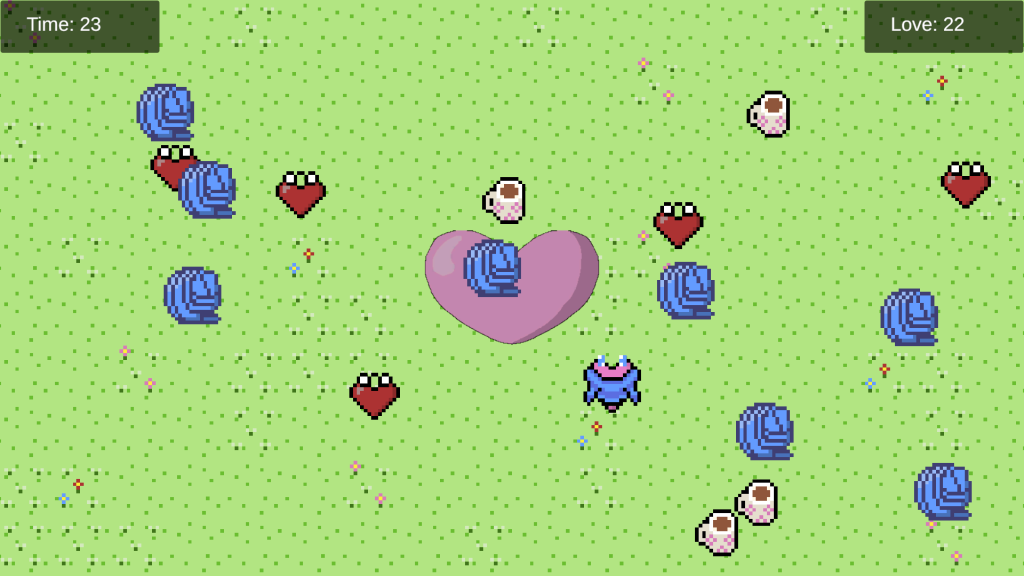
I wanted to create a very small, quick game as a gift for my wife for Valentine’s day. The main goals of this project were: make it nice and personalized, create something playable very quickly (since I had about 4 days to make it at the time), and learn to create digital art in some form.

The very small timeline was a good test to see how quickly I could put a playalbe demo of something together. Making it personalized and learning to create digital art went hand in hand, and I decided to get back into using Aseprite as a seemingly quick way to get into making digital art in some form since it is pretty basic and you can emulate existing sprite art relatively easily.

Aesprite:
As mentioned, my art software of choice for this project was Aesprite. It was actually very quick to pick this up if you do not need any fancy art tools besides “click to make pixels and sprites”. I could immediately generate single frame sprites and export those to easy to use 16 px x 16 px PNGs to use in the game. And I knew for the player I wanted the sprite to change as it constructed its own sweater, so that provided a quick pathway to starting to learn how to setup a basic sprite sheet in Aesprite by just adding a few frames to a given Aesprite file (which will be helpful for getting into animation later).

Screenshot of Current State of Game:

Screenshot of Valentine's Game Prototype

Doppler Effect in Mario Kart – Game Audio – by Scruffy

July 1, 2021

Doppler Effect and Audio Controller

Game Audio


Title:
Mario Kart and the Doppler Effect

By:
Scruffy


Youtube – Information

Description:
Explanation of how Mario Kart creates the doppler effect and efficiently distributes audio to multiple players.


Overview

This video covers how Mario Kart Wii specifically uses the doppler effect, as well as just how some of their audio systems work in general. It is decent coverage of how to implement a basic doppler effect system into a game in general.

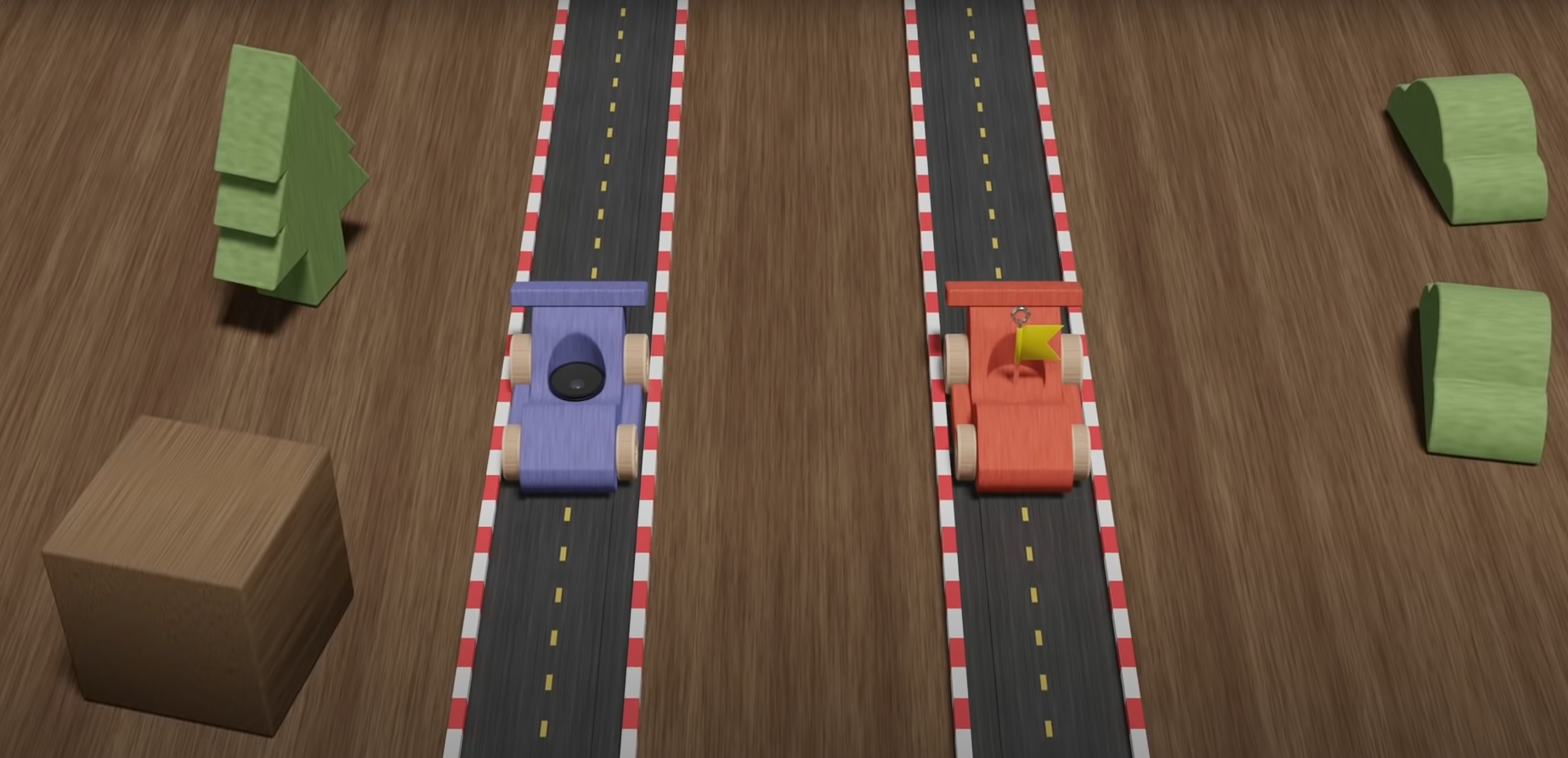
Fig. 1: Image from “Mario Kart and the Doppler Effect” Video Above by Scruffy

Setup of Doppler Effect System

The key is the relationship between sound frequency and relative velocity of objects. Their approach to measure this is just by measuring the distance from the audio source to the audio listener each frame, and if there is a difference, that is used for a relative velocity term. This relative velocity term is bound to some negative and positive scale (one direction meaning higher frequency and the other being lower frequency). The way this relative velocity maps to a difference in sound frequency can use any mathematical relationship to fit whatever feels best (i.e. linear, logarithmic, etc.).

They break this core down into three basic steps:

  1. Get distance between source and listener each frame
  2. Subtract from previous for rate of change
  3. Map rate of change to determine sound playback speed (to taste)

Expansion of the System and Efficiency

This explanation shows the direct relationship between an audio source and an audio listener, but games tend to have many audio sources. They show how immediatley this can at least be simplified by having some audio distance so the calculations only need to be performed on objects within a certain distance of the listener. The other big part of simplifying the system is just limiting which sources implement the doppler effect. Not every sound needs to use this, so it can be removed from many standard sources (i.e. the crowd in Mario Kart).

Split Screen Solution

This is fairly niche, but still interesting. With split screen, the audio of multiple listeners needs to come through a single audio output. Since they may experience different levels of the doppler effect for the same audio sources, they needed a solution to provide an experience that does not sound like a mess. Their approach was that each player only makes sound in their own camera (so one player is not listening to the other on the same screen), and when dealing with outside sources, only the player closest to the audio source is taken into account. The other player’s audio for that source is simply negated. This is a nice solution as the system already takes the distance between sources and listeners into account anyway.

via Blogger http://stevelilleyschool.blogspot.com/2021/07/doppler-effect-in-mario-kart-game-audio.html

BitFontMaker 2 – Make Your Own 8-Bit Style Fonts

February 23, 2021

Font Creation

Game Text


BitFontMaker 2 – Pentacom.jp

Description:
Online tool for building your own bit-style fonts for games.


Overview

This was a neat tool I saw AdamCYounis using to create their own stylized bit-style text for their game project. It appears to be straight forward to use, and allows you to build out all the individual characters for a font using a pixelized grid to design each of them.


Fig. 1 – BitFontMaker2 Site Example with “A” Being Drawn

via Blogger http://stevelilleyschool.blogspot.com/2021/02/bitfontmaker-2-make-your-own-8-bit.html

Online Multiplayer Networking Solution Tutorial Using Unity and Mirror – Tutorial by: Jason Weimann

February 2, 2021

Networking Online Multiplayer

Unity & Mirror

Title:
Let’s build a 4-Player Networked Game LIVE – Online Shooter (with Mirror & Unity)

By:
Jason Weimann


Youtube – Tutorial

Description:
Intro to using Mirror for networking online multiplayer play in Unity development.


Introduction

This tutorial has Jason Weimann implementing online network play into a basic Unity twin-stick shooting game. They use Mirror, which is a Unity asset used for simplifying the online network synchronization process. This is a live implementation where they work through many errors transferring a game from simply working locally to working with a host/client relationship.

Mirror

Mirror – Home Page

Mirror is “a high level Networking API for Unity, supporting different low level Transports” (from Mirror themselves). It is a clean solution for implementing a quick and simple online networking option for Unity projects. The core components breakdown as such (supplied by their site):

  • [Server] / [Client]: tags can be used for the server-only and client-only parts
  • [Command]s: are used for Client -> Server communication
  • [ClientRpc] / [TargetRpc]: for Server -> Client communication
  • [SyncVar]s and SyncLists: are used to automatically synchronize state

Authoritative Server

When creating a networking environment for a project, it is important to determine what aspects of it are determined server-side and what are determined client-side. With games, most information should generally be handled server-side since this helps prevent cheating or hacking. Most games with larger scale player bases will have dedicated servers to handle the online play of the games, and these handle a majority of the data as well as checking data coming in from the clients helps in the efforts to mitigate cheating.

As they go through the tutorial, the only information they end up handling client-side is that specific player’s transform. To help keep the game feeling as clean and smooth as possible for the player, they at least allow this to be determined client-side so any of their movement is quickly shown to them. This information is then sent to the server to be distributed. While this opens an avenue for cheating, the data being sent from the client can be checked before truly being implemented if this is a real concern.

After that almost everything is handled on the server-side. When the client wishes to do something, the server generally runs the actual logic and then sends the data to the client using a Mirror [ClientRpc] attribute. Many of the major mechanic handling scripts then only run ifServer and handle the information coming in to determine what events will actually occur.

List of Client-Side Authorization

  • Player Movement

List of Server-Side Authorization

  • Bullet Spawn
  • Bullet Transform
  • Enemy Spawn
  • Enemy Transform

Transitioning from a Local Project to a Network Project

Removing Duplicated Logic

One of the common issues they ran into in the tutorial while transitioning from a basic local project to a network project using Mirror was that in their efforts to have the server handle most logic, sometimes they would accidentally have the server as well as the client running the same logic. This produced weird results in various cases, from stuttering enemy movement to strange projectile effects. This would happen when adding to functionality of only running something server-side, but then forgetting to remove the logic from occurring just locally. This could cause instances of the same logic running twice effectively.

Basics of Testing Networking in Unity with Mirror

As this can lead to many bugs and errors, testing is critical when dealing with networking elements. There are several ways to go about this, but one of the simplest and what they use in the tutorial is building the project, then using that build as one network user (Client/Host) and the Unity Editor as the other (Host/Client). Mirror allows for a quick GUI implementation providing a Host button and Client button to connect to said Host using an IP address. “LocalHost” can be used in place of the IP address when doing the suggested testing, as this has the client look on its own computer for the game host.

Further details on the Network Manager HUD and using the base network connectivity can be found here on Mirror’s site:

Mirror – Network Manager HUD

Summary

This tutorial seems to show that Mirror is a decent option for quickly implementing an online network multiplayer solution for your simpler Unity projects. This simplified approach to setting up a network project also seems like good practice for getting your feet wet with dealing with networking implementation into Unity projects in general. It still requires client-side and server-side differentiation and managing what data is handled where and passing data between the two, so this appears to me as good practice for understanding these concepts. It also does just appear to work rather easily, so if you just want to get some kind of online multiplayer working for your project this seems like a useable solution.

via Blogger http://stevelilleyschool.blogspot.com/2021/02/online-multiplayer-networking-solution.html

7 Steps for Starting Every Game Project – from Jason Weimann

December 21, 2020

Setup for Every Game Dev Project

Unity Setup


Title:
Do these 7 things for EVERY game!

By:
Jason Weimann


Youtube – Information

Description:
7 major steps to do for any non-minimal game development project, with a focus on Unity development.


Overview

This quick video is seven good steps to take when setting up a new game project assuming it is something you will be working on for any length of time. These tips range from general good practices that really should just be done on any project to helpful actions for keeping you organized and moving forward.

via Blogger http://stevelilleyschool.blogspot.com/2020/12/7-steps-for-starting-every-game-project.html